What is a bioswale?
Bioswales, also known as vegetated swales, are designed to manage stormwater runoff and improve water quality. They are essentially contoured land areas or ditches covered in plants, engineered to collect, slow, and filter stormwater.
Bioswales are constructed as depressions or channels in the landscape. These can be straight channels or designed to mimic natural, meandering streams. They are typically planted with native plants, which help in filtering pollutants and absorbing water. Bioswales also serve as an aesthetically pleasing and effective alternative or complement to traditional underground storm sewer systems, contributing to better stormwater management and water quality.
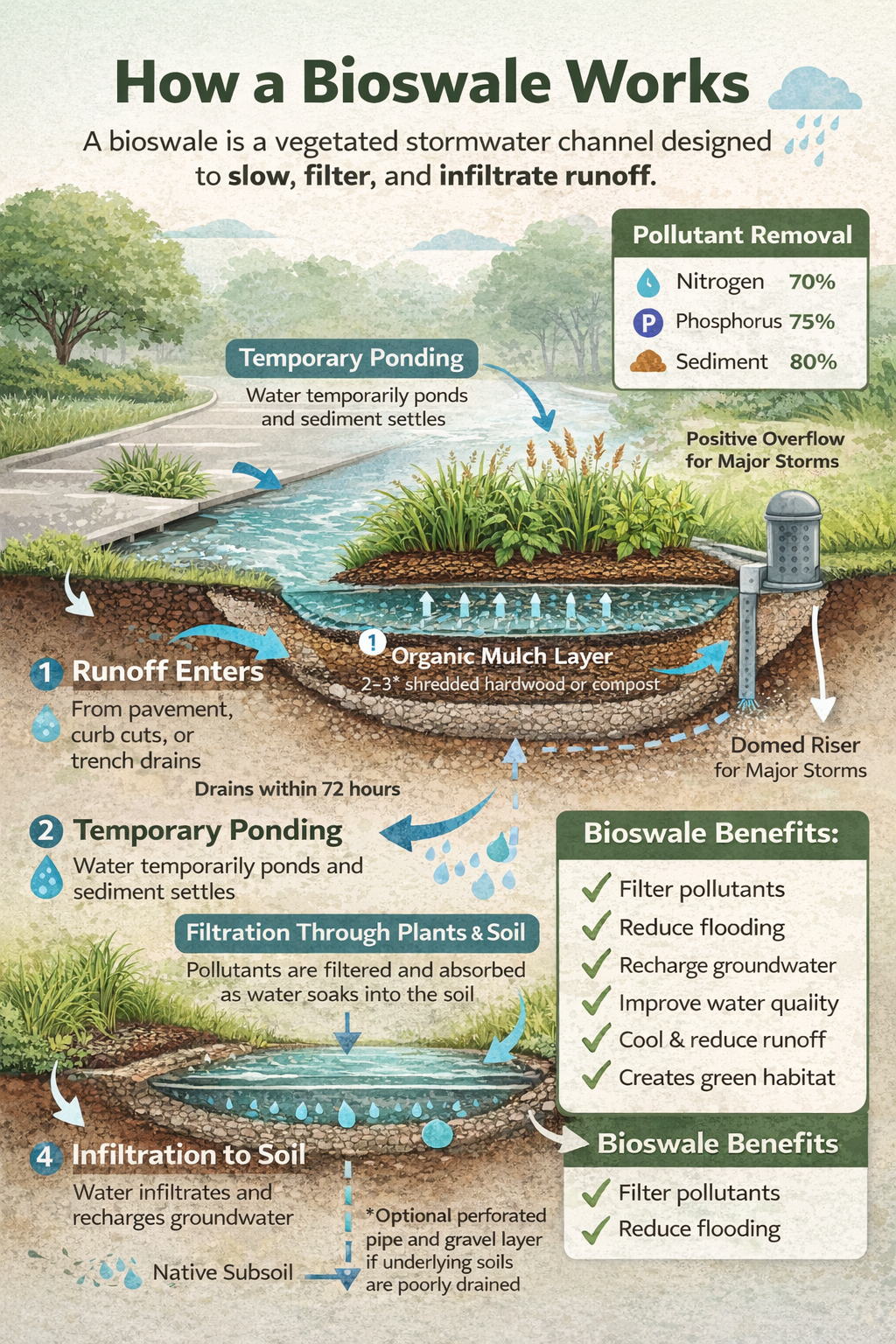
Often, bioswales are built with specialized soils that are designed to naturally treat stormwater runoff, enhancing their pollutant removal capabilities. The diagram below provides a conceptual display of a bioswale. As stormwater flows through a bioswale, its velocity is reduced, allowing suspended particles, including those with bound nitrogen, to settle out (sedimentation). The plants and soil also act as a physical filter, trapping particulate matter and associated pollutants. Bioswales with sustained saturation zones create an environment conducive to microbial activity. Bacteria in these zones facilitate denitrification, a process that converts nitrate (a form of nitrogen) into nitrogen gas, which then dissipates into the air. Plants within the bioswale absorb nutrients, including nitrogen, during their growth cycle, incorporating them into their tissues.
How is a bioswale different from a rain garden?
Rain gardens are designed to capture and hold stormwater runoff from downspouts, driveways, patios, streets, sidewalks, and parking lots. They have porous soil that acts like a sponge, allowing water to soak in quickly, usually within a day or two after a rain event. This process recharges groundwater, reduces flash flooding, and protects streambanks from erosion.
Bioswales collect stormwater runoff and move it away from impervious surfaces like roads, parking lots, or rooftops, while simultaneously slowing down the water flow and allowing it to infiltrate the ground and be filtered by plants and specialized soils.
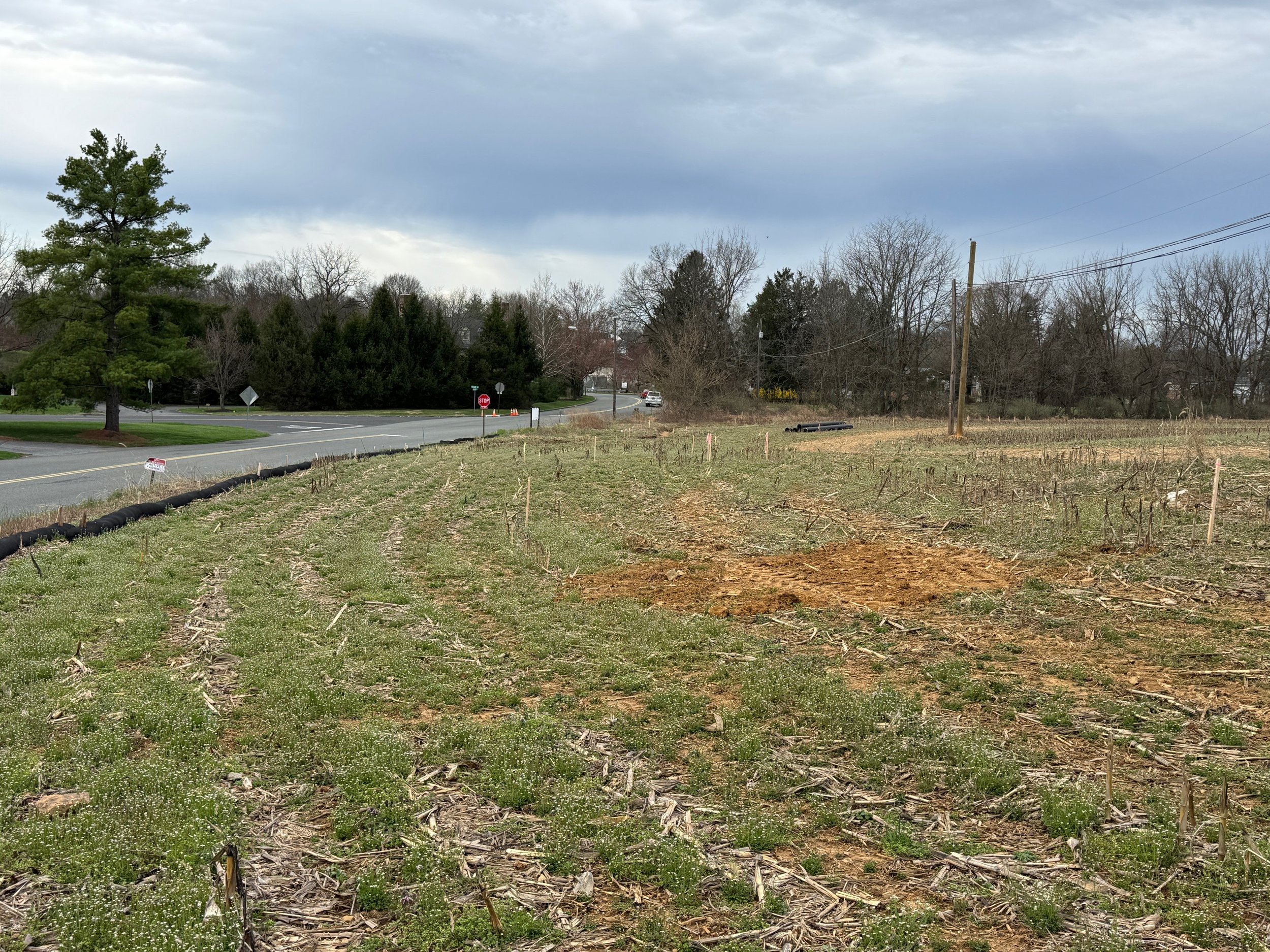
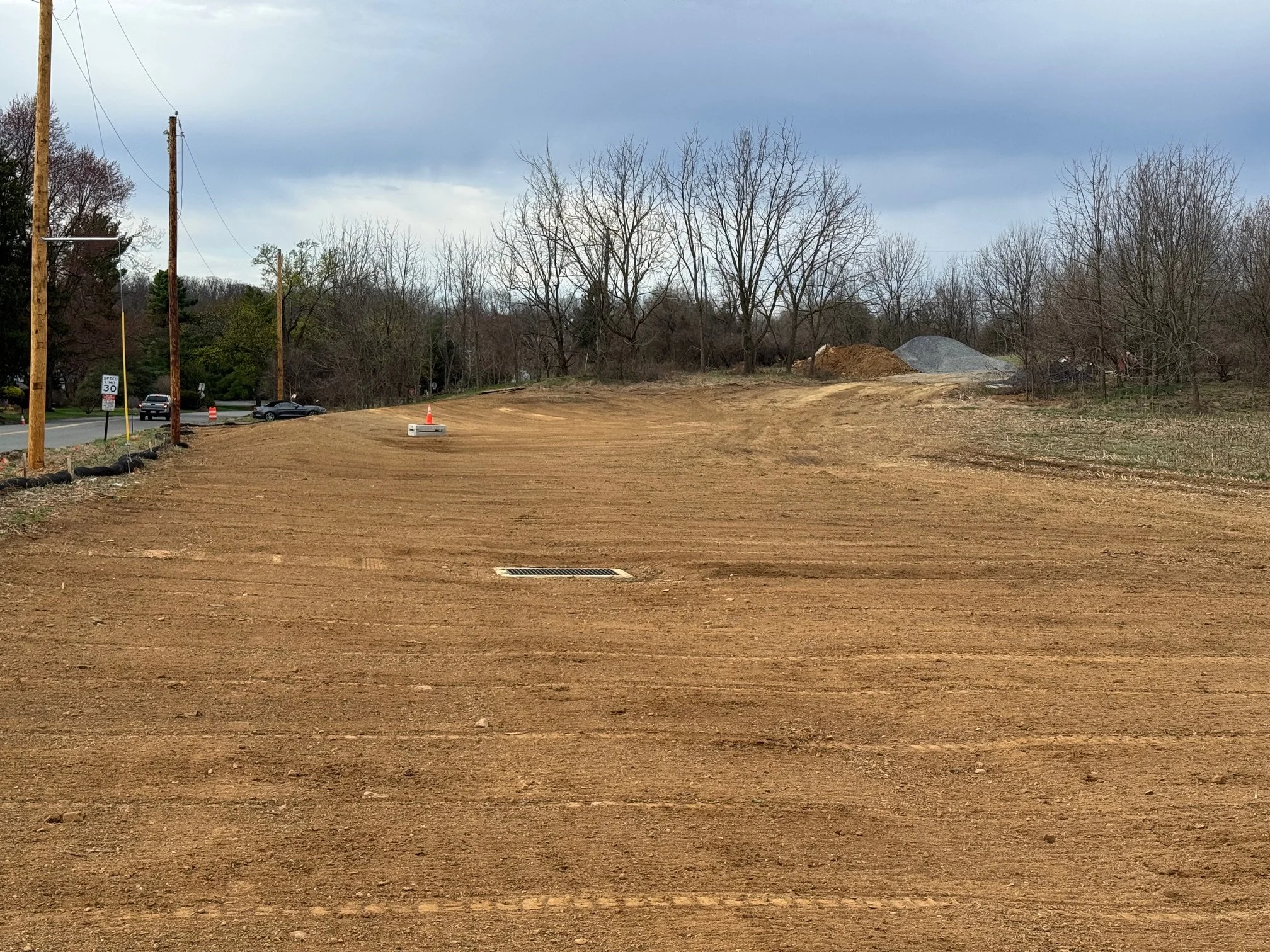
New bioswale in South Whitehall Township
South Whitehall Township is installing a bioswale to help manage runoff from preserved open-space property adjacent to Springhouse Road. The bioswale is an important project which represents a significant step forward in the Township’s commitment to environmental stewardship and sustainable stormwater management. The bioswale is designed to help manage flooding and reduce stormwater runoff from the surrounding fields. By naturally capturing, slowing, and filtering rainwater, the bioswale will improve drainage, reduce erosion, and enhance water quality before runoff reaches nearby waterways. It can also help eliminate nitrogen, phosphorus, and sediment before it enters the Little Lehigh Watershed. This initiative reflects South Whitehall Township’s proactive approach to protecting open space, preserving natural resources, and implementing green infrastructure solutions that benefit both residents and the environment. The second picture on the left shows the bioswale status as of 4/1/2026.
Project information: https://local.nixle.com/alert/12251133/?sub_id=0
Additional information on bioswales:
Penn State University Extension Resource (by Jodi Sulpizio, MWS Coordinator/Educator): https://extension.psu.edu/roadside-guide-to-clean-water-vegetated-swales
YouTube Video: What is a Bioswale https://youtu.be/r5lA3CqorR8
The information on this page was provided by TilvaTM, the Penn State University Extension AI tool. Some editing was performed to make the content more concise.